Malaysians eat five times a day and argue about all of it. The national conversation is not politics or football — it is whose stall does the better version.
What to order first
Start with these six and you will have covered the three cuisines that built the country.
Nasi lemak
Rice steamed in coconut milk with pandan, served with sambal, fried anchovies, peanuts, cucumber and half a hard-boiled egg. Breakfast, mostly, though nobody will stop you at midnight. The sambal is where stalls win or lose.
Char kway teow
Flat rice noodles seared over ferocious heat with prawns, cockles, egg, chives and bean sprouts. The prize is wok hei — the faint smokiness only a properly hot wok gives. Penang's version is the benchmark.
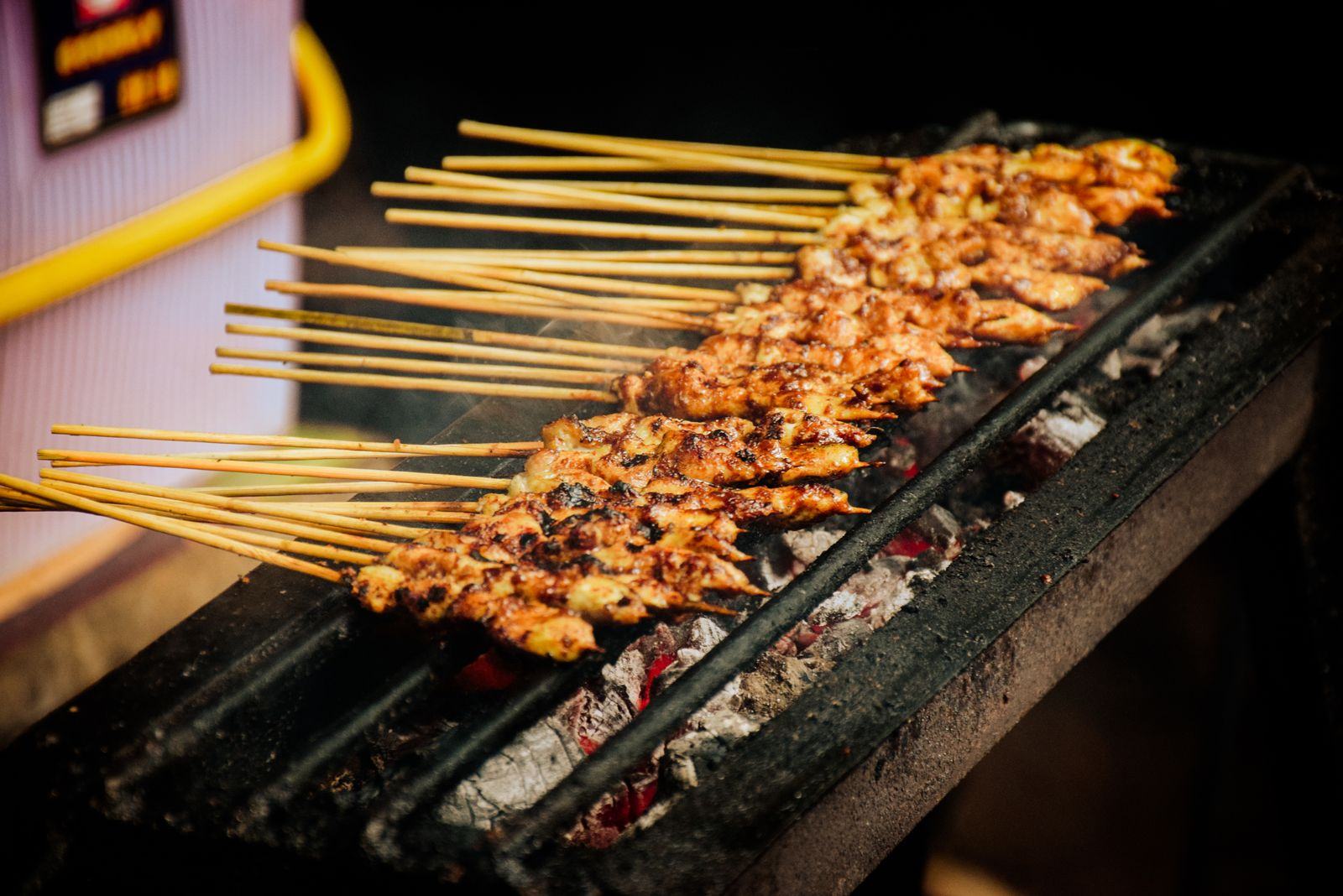
Satay
Skewers of marinated chicken, beef or mutton grilled over charcoal, with a thick peanut sauce, compressed rice cakes and raw onion. Kajang, just south of KL, has built a reputation on it.
Roti canai
Dough slapped, spun and flipped into flaky layers, griddled and served with dhal or curry. The best is at a mamak — an Indian-Muslim coffee shop — and the best time is 7am or 2am.
Laksa
Two different dishes with one name. Asam laksa in Penang is sour, fishy and tamarind-sharp. Curry laksa in KL is rich with coconut milk. Both are correct; saying so out loud avoids arguments.
Cendol
Shaved ice, coconut milk, palm sugar and green rice-flour jellies. The full stop at the end of a hot afternoon.
Where to eat
Four settings, each with its own rhythm.
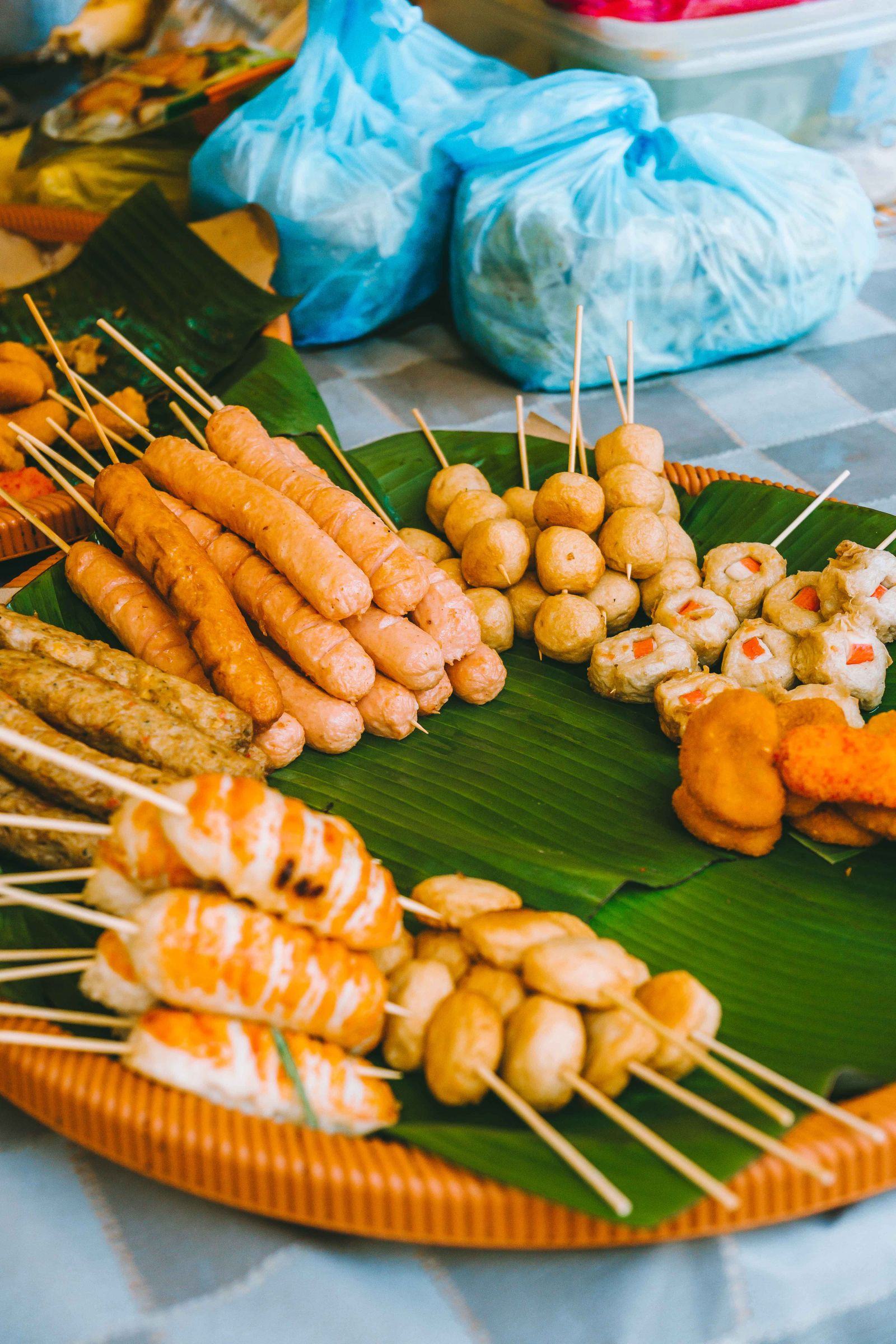
- Hawker centres and food courts — a roof over many stalls with shared tables. Order from whichever stall you like; drinks come from a separate stall and are ordered separately.
- Kopitiam — the old coffee shop. Toast with kaya, soft-boiled eggs, thick coffee. Morning territory.
- Mamak — Indian-Muslim, open late or all night, fluorescent-lit, football on the television. Roti, teh tarik, mee goreng.
- Pasar malam — the night market, rotating through a different neighbourhood each evening of the week. Ask a local which night is theirs.
Streets worth the trip
Jalan Alor in KL is the obvious one — touristy, still good, best after 8pm. Gurney Drive and Chulia Street in Penang are where the food-obsessed go. Jonker Street in Melaka runs weekend nights. In Kota Bharu, the night market behind the central market cooks the east coast's own repertoire, which is sweeter and more coconut-heavy than the west.
How to order without embarrassment
There are a few unwritten rules, and following them will earn you a nod.
- Find a table first, then order. Placing a packet of tissues on a table claims it. This is a real convention, not a joke.
- Order drinks from the drinks stall. In a hawker centre the drinks seller usually rents the space and expects everyone seated to buy something.
- Pay each stall on delivery. There is no single bill.
- Say how spicy. Kurang pedas is less spicy; tak nak pedas is none. Standard is hotter than most visitors expect.
- Eat with your right hand if you go without cutlery, and never pass anything with your left.
Halal, and asking about it
Most Malay and mamak stalls are halal; many Chinese stalls are not, and pork is common at them. Stalls are generally clear about it, and asking politely is completely normal.
What to drink
Order the way locals do and the vocabulary starts making sense.
- Teh tarik — "pulled" tea, poured between two vessels until it foams. The national drink.
- Kopi O — black coffee with sugar. Add kosong for no sugar, ais for iced.
- Milo ais — iced malted chocolate, taken far more seriously here than anywhere else.
- Sirap bandung — rose syrup with condensed milk, alarming pink, very good.
- Air limau ais — iced lime juice, the best antidote to chilli.
If a stall has a queue of office workers at 12:30pm, join it. That is the only review that matters.
Practical notes
- Cash. Many stalls now take QR payments, but small notes still move fastest.
- Timing. Breakfast stalls sell out by 10am; famous ones sell out much earlier. Supper runs past midnight.
- Hygiene. Busy stalls turn over stock quickly, which is the best guarantee you have. Stick to cooked-to-order food and bottled or boiled drinks for the first few days.
- Ramadan. During the fasting month, daytime options narrow but the afternoon bazar Ramadan markets are the best eating of the year.
Filed under Food · Nationwide
All experiences