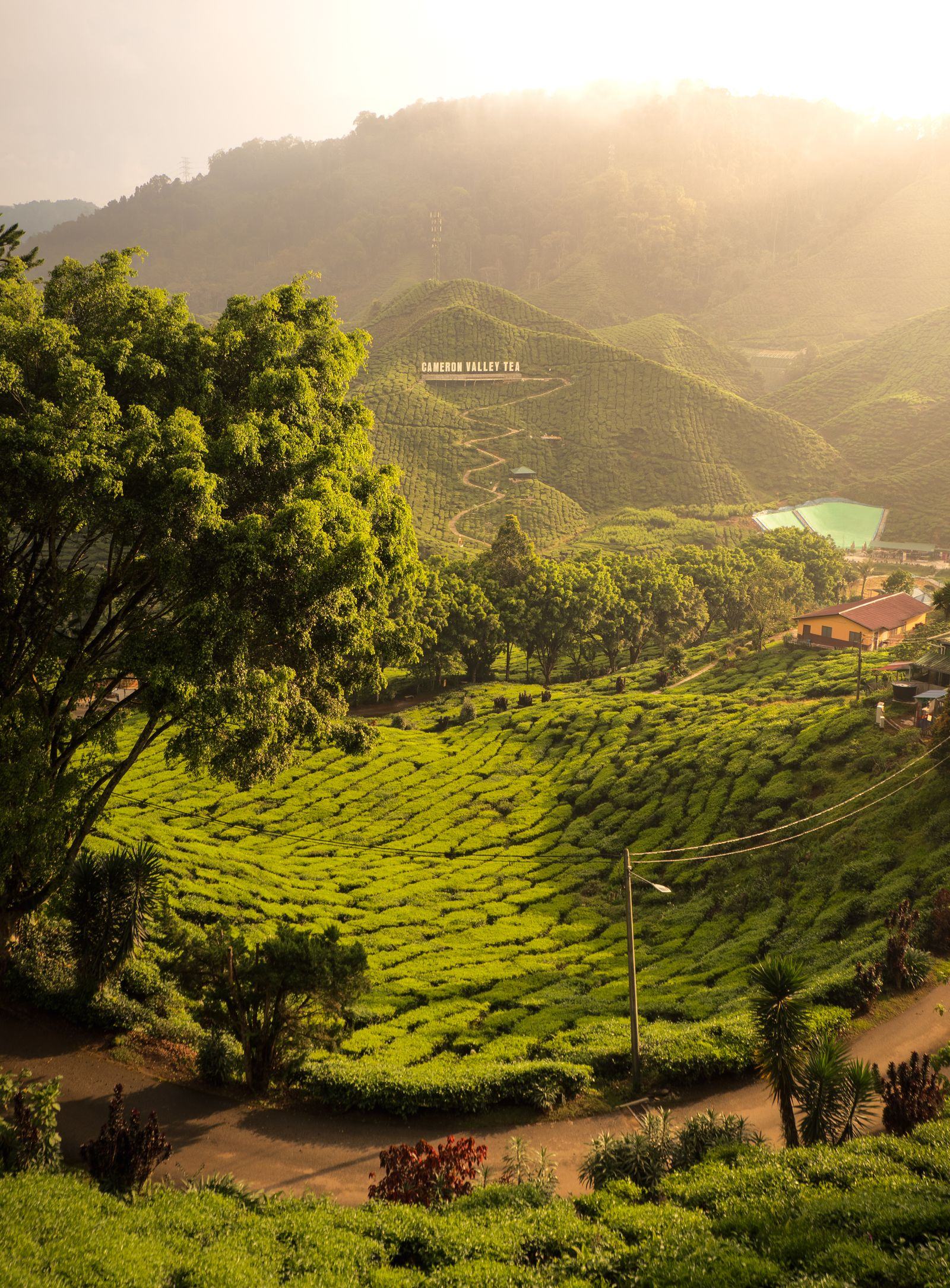
At 1,500 metres the tropics take a breath. You will want a jumper, which after a week at sea level feels like a small miracle.
The place
The Cameron Highlands sit in the Titiwangsa range in Pahang, named for the British surveyor who mapped the plateau in 1885. The British built it as a hill station — somewhere to escape the coastal heat — and the inheritance is still visible in the mock-Tudor guesthouses, the scones, and the fact that everyone stops for afternoon tea.
Daytime temperatures sit around 20–24°C and nights drop into the low teens. Mist arrives most afternoons. It rains often, briefly and hard.
Three towns strung along one road: Ringlet at the bottom, Tanah Rata in the middle (where the buses, restaurants and hiking trails are), and Brinchang above it (closer to the farms and the night market).
Tea, properly
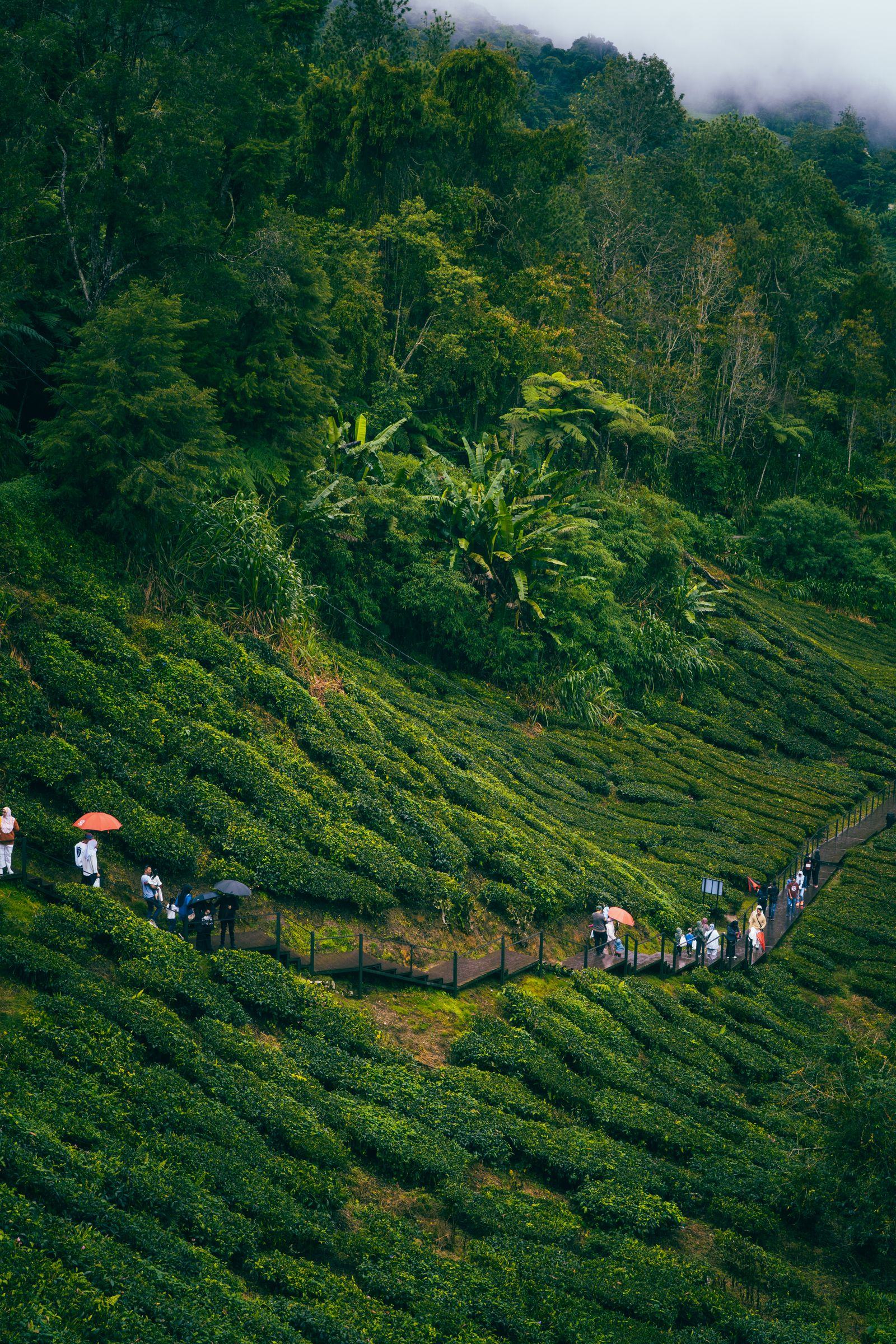
Tea has been grown here since the 1920s, and the plantations are the reason most people come.
BOH Sungai Palas
The best-known estate, with a cantilevered tea room that hangs over the valley and a short factory walkthrough explaining withering, rolling and firing. Go early — by midday the car park is full and the terrace has a wait.
Bharat and Cameron Valley
Smaller, closer to the main road, and easier to reach without a car. The views are nearly as good and the queues considerably shorter.
Whichever you choose, the walk matters more than the cup. The footpaths between the tea bushes are open, and twenty minutes into them the crowds vanish and you get the long green corduroy view that brought you up the hill.
The Mossy Forest
Near the summit of Gunung Brinchang, at just over 2,000 metres, the highlands turn strange. Cloud sits permanently in the canopy, and everything — trunks, branches, the ground itself — is upholstered in moss a hand deep. Pitcher plants grow beside the boardwalk. Orchids grow on everything else.
A raised boardwalk protects the most fragile section, and access is regulated with a permit and a guide during busy periods. The mossy layer takes decades to recover from a single footstep, so staying on the boards is not a suggestion.
Go at dawn
The forest is at its best before the tour vans arrive, and the road up Gunung Brinchang is single-lane, steep and unpleasant to share. Most guesthouses in Tanah Rata run a sunrise trip.
What else fills a day
- Strawberry farms. The cool climate crop the highlands are famous for. Pick-your-own is everywhere and unabashedly touristy; the strawberry jam and the strawberry-flavoured everything is part of the fun.
- The Sunday market at Kea Farm. Vegetables, flowers, honey and highland corn, sold to the whole peninsula.
- Butterfly and bee farms. Small, cheerful, good for children.
- Hiking trails. A numbered network runs from Tanah Rata into the forest. Trail 10 to Robinson Falls is short and easy; several others are steep, unmarked in places and genuinely disorienting in cloud.
- Time Tunnel museum. A cluttered, charming collection of highland ephemera from the tin and tea years.
The mist is not a problem to be waited out. It is the reason the tea grows.
Practical notes
- Getting there. About four hours from Kuala Lumpur or three from Ipoh by road. Buses run to Tanah Rata from KL's TBS terminal. The last stretch is a long series of switchbacks — sit at the front if you're prone to car sickness.
- Weekends are crowded. The single road through the highlands jams badly on Saturdays, public holidays and school breaks. Come midweek if you can.
- Pack a layer. Evenings are genuinely cold by Malaysian standards, and most guesthouses have no heating.
- Rain gear. An afternoon downpour is close to guaranteed. The trails turn to clay.
- Getting around. Attractions are spread over 30km with limited public transport. Guesthouse tours or a hired car and driver are the practical options.
Filed under Highlands · Pahang
All experiences