In 2012 a Lithuanian artist painted a few children on the walls of a UNESCO port town, and George Town has been read as an open-air gallery ever since.
How it started
George Town was inscribed as a UNESCO World Heritage Site in 2008, along with Melaka. Four years later the George Town Festival commissioned Ernest Zacharevic to make a series of works about the city, and the result — Mirrors George Town — changed how visitors move through it.
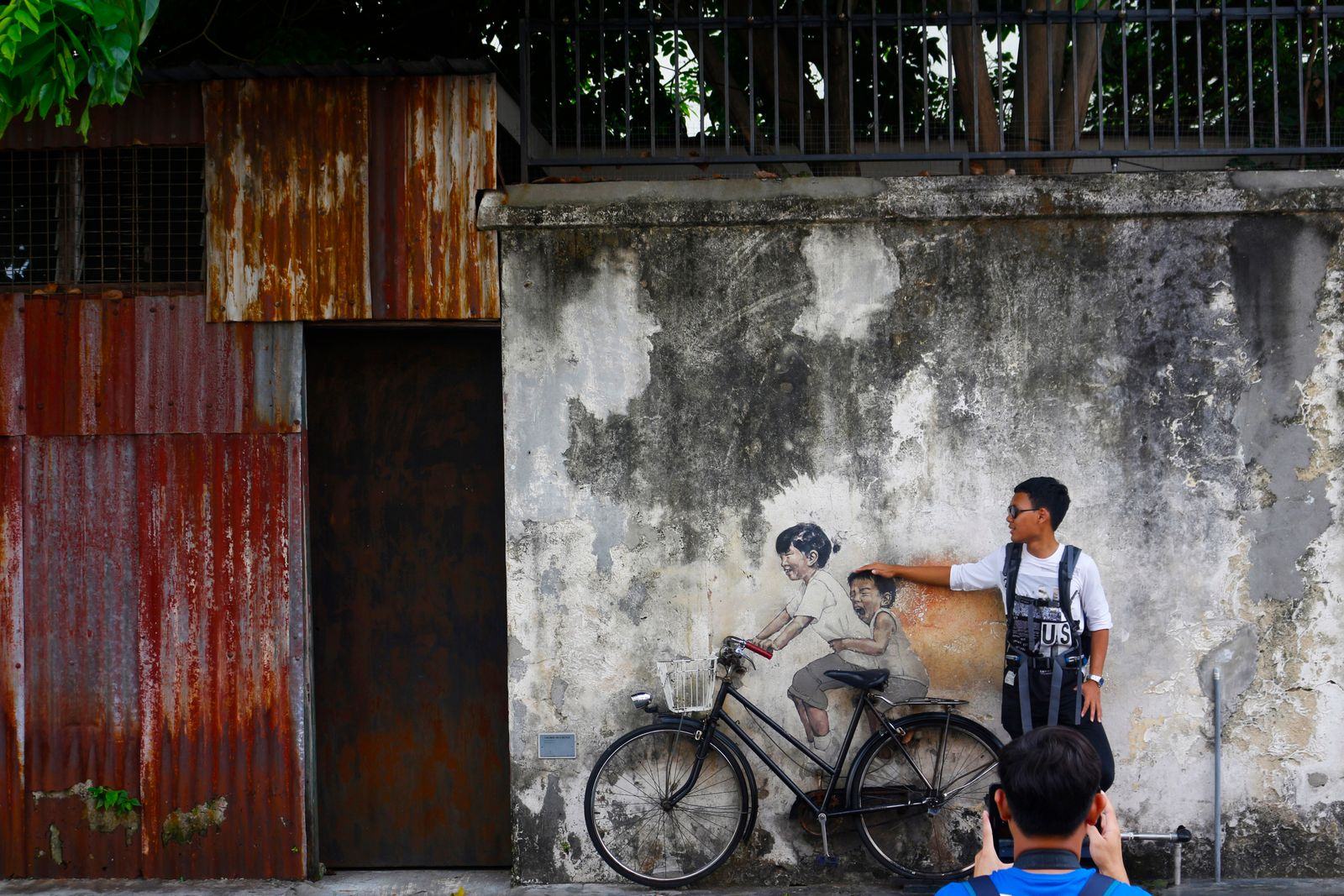
The murals worked because they weren't only paint. Zacharevic hung a real bicycle on the wall and painted two children riding it. He set a real motorbike beneath a painted boy. The city supplied half of each picture, so the works only make sense standing in front of them.
Running alongside them is a quieter, older commission: 52 wrought-iron caricatures installed around the inner city, each a wry cartoon explaining the street it stands on — why Cannon Street is called that, what happened on Love Lane. Together the two sets turn a walk into a reading.
Walking the trail
The core of it fits into a morning. Start early — by eleven the heat and the queues for photographs both arrive.
Armenian Street and around
The densest cluster. Kids on Bicycle, the most photographed work in Malaysia, is on Armenian Street itself, usually with a small crowd waiting their turn. Within a few minutes' walk are Boy on Bike, Little Children on a Swing and a scatter of newer pieces by other artists.
Lebuh Chulia and Love Lane
The backpacker spine, and the best of the iron caricatures. Chulia Street has been receiving travellers for a century and a half; the coffee shops here still open before dawn.
Lebuh Ah Quee and the clan jetties
Boy on a Chair and several trompe l'oeil works sit along Ah Quee. Push east and you reach the clan jetties — stilt villages over the water, each belonging to a different Chinese clan, still lived in and not a museum.
Trishaw or foot?
The heritage core is walkable and mostly flat, but the trishaw uncles know where every mural is and will find the ones not on the map. Agree the route and the fare before you sit down.
Beyond the paint
Chasing murals will walk you past the actual reason George Town is protected, so slow down for it.
- Cheong Fatt Tze Mansion — the indigo-blue courtyard house of a Hakka tycoon, restored from near ruin and now open for guided tours.
- Khoo Kongsi — the most elaborate clan house in the country, its roof crowded with ceramic figures.
- Kapitan Keling Mosque, Sri Mahamariamman Temple, Kuan Yin Teng and St George's Church — four faiths within a few hundred metres, on the stretch known as the Street of Harmony.
- Kek Lok Si — the vast hillside temple complex at Air Itam, especially in the weeks around Chinese New Year when it is lit end to end.
The other half: Melaka
Melaka shares the UNESCO listing and rewards the same slow walking, though it wears its history differently. Where George Town is a working port town, Melaka has been polished for visitors — and is still worth every hour.
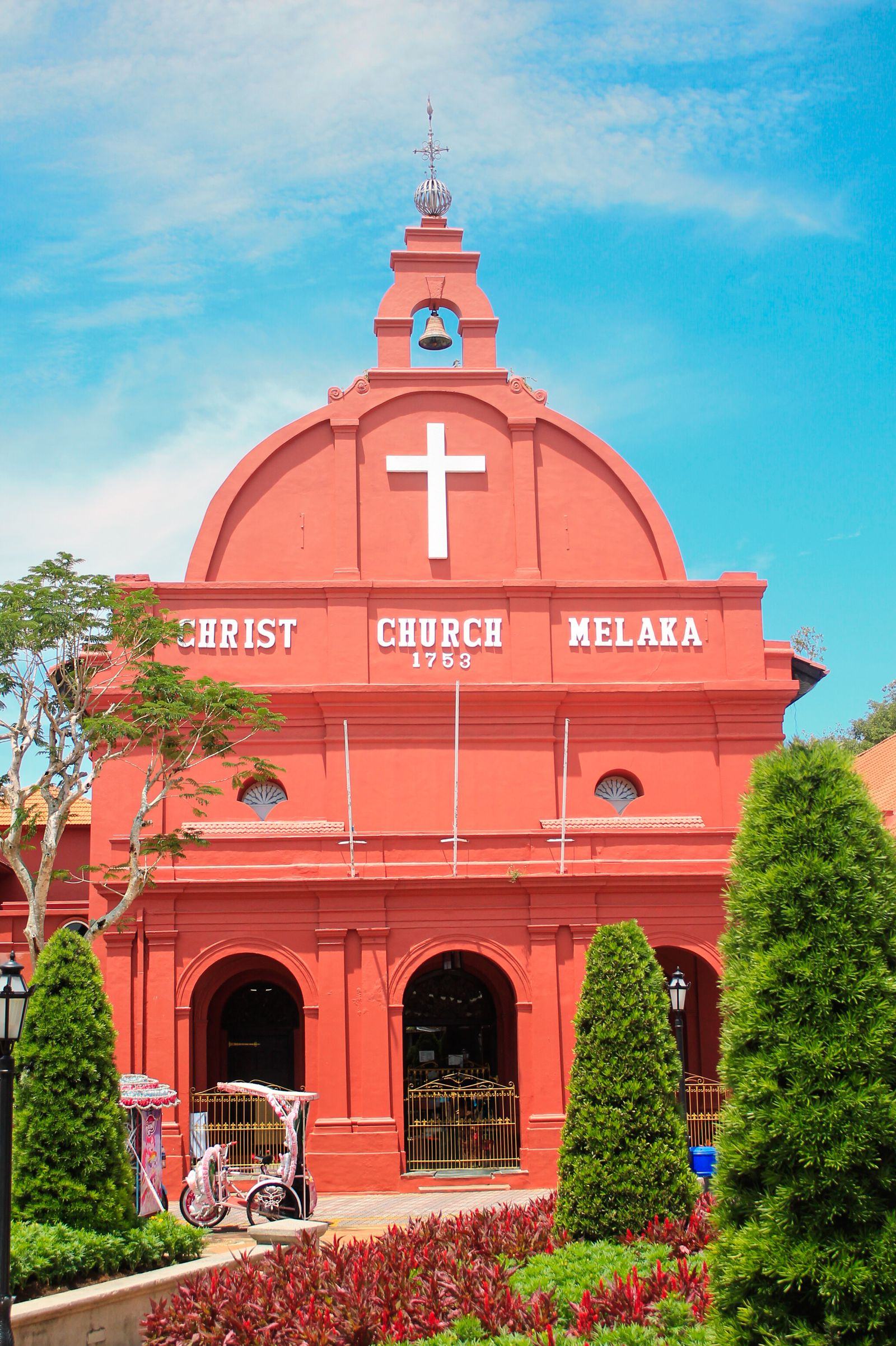
Dutch Square is the picture everyone takes: Christ Church and the Stadthuys in deep oxblood red, built by the Dutch in the seventeenth century. Behind them, St Paul's Hill holds a ruined Portuguese church and a view down to the strait that made the city rich. Jonker Street runs antiques and cafes by day and turns into a night market from Friday to Sunday.
Melaka's own painted walls line the river, best seen from the boat that runs the length of it after dark.
Practical notes
- Go early or late. Between 11am and 4pm the equatorial sun makes the shadeless lanes hard work, and every mural has a queue.
- Murals fade. Some of the 2012 works have weathered badly or been painted over; treat any map as a suggestion rather than a guarantee.
- Respect the houses. Most murals are on private shophouse walls with people living behind them. Don't block doorways for a photograph.
- Getting there. Penang has an international airport; the ETS train from KL to Butterworth takes about four hours and ends with a ferry. Melaka is a two-hour bus ride from KL.
Filed under Heritage · Penang & Melaka
All experiences