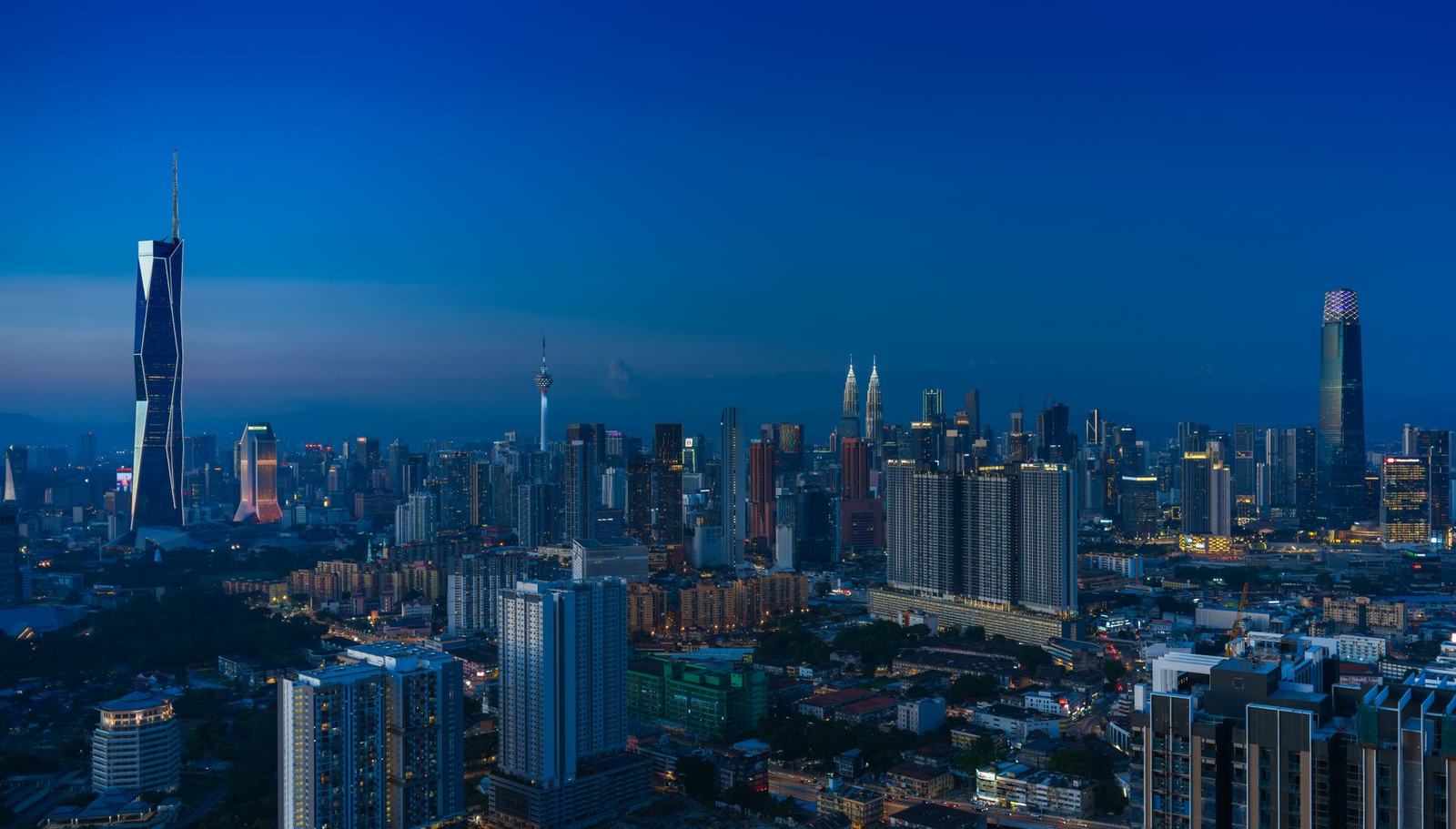
Kuala Lumpur was a tin-mining camp at a muddy river junction in 1857. It now holds two of the tallest buildings on earth, and it lights all of them.
The towers
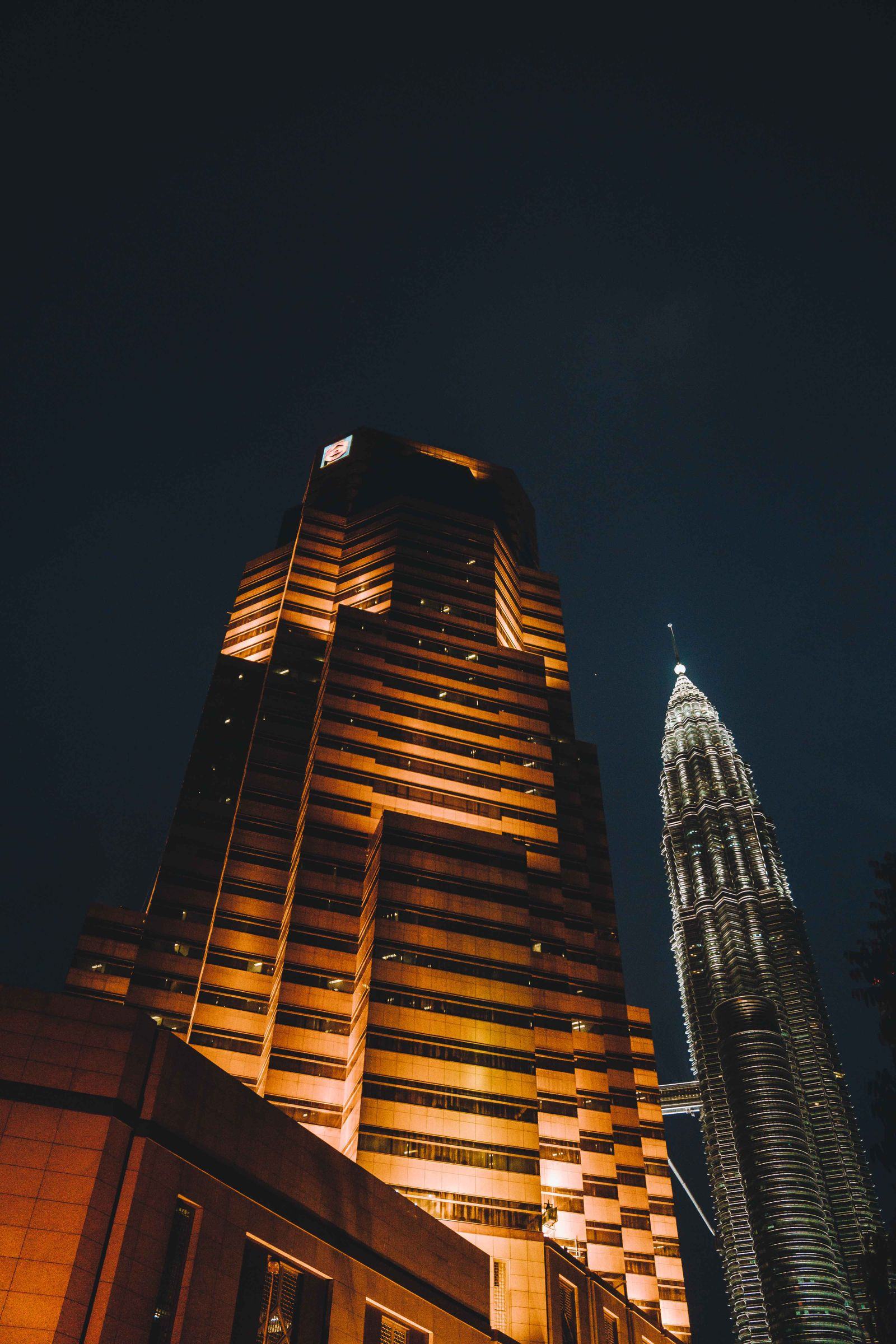
Three buildings define the view, and each gives you a different one.
Petronas Twin Towers
451.9 metres of stainless steel and glass, designed by César Pelli with a floor plan drawn from Islamic geometry — two interlocking squares softened by circles. They were the tallest buildings in the world from 1998 to 2004 and remain the tallest twin towers anywhere. Tickets get you the double-decker skybridge on levels 41 and 42, then the observation deck on 86. Book online; walk-up slots go early.
Menara KL
The telecommunications tower on Bukit Nanas, 421 metres and standing on higher ground, which means its observation deck is actually higher above sea level than the Petronas deck. It has the advantage every photographer wants: from here, the Twin Towers are in your picture.
Merdeka 118
678.9 metres, the second-tallest building in the world, tapering to a spire above the field where independence was declared in 1957. It reorganised the southern skyline entirely.
Where to watch from
The blue half-hour after sunset — roughly 7:15 to 7:45pm year-round, since KL sits near the equator and the day barely changes length — is when the sky and the buildings balance. Arrive an hour before.
- KLCC Park. Free, grassy, and the classic angle on the Twin Towers. The Lake Symphony fountain show runs several times each evening.
- Rooftop bars. A cluster of them look straight at the towers from Jalan P. Ramlee and the Bukit Bintang side. Most have a dress code after 6pm.
- Saloma Link. A pedestrian bridge shaped like a sirih leaf, lit at night, connecting Kampung Baru to the KLCC side. The best free photograph in the city.
- Kampung Baru. A Malay village of wooden stilt houses that never sold to developers, with the skyline rising directly behind it. Come for supper and stay for the contrast.
After dark
KL does not really stop. The mamak stalls run until dawn and the night markets run until they sell out.
Jalan Alor
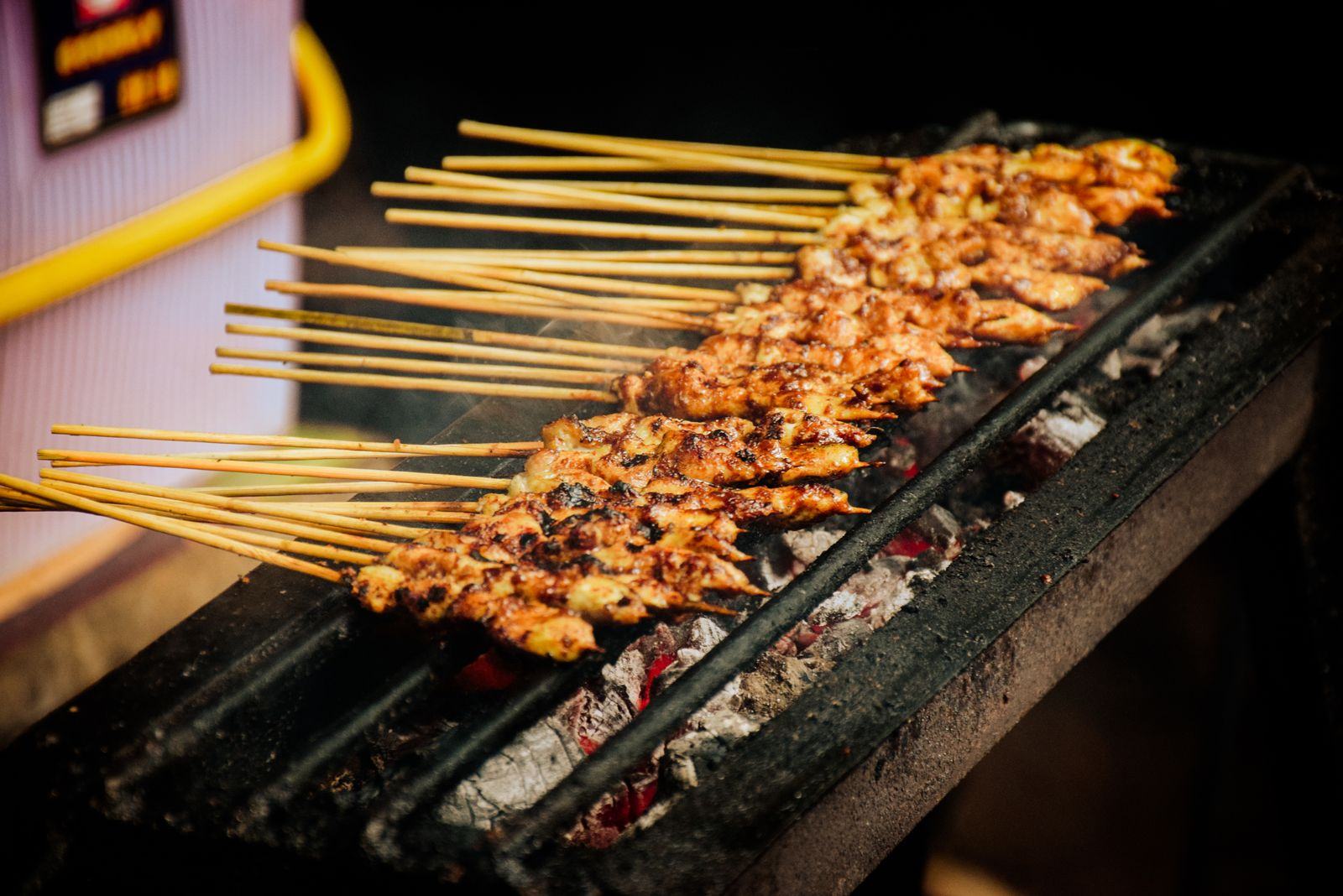
Two hundred metres of plastic stools and charcoal smoke behind Bukit Bintang. Touristy and still worth it. Grilled seafood, satay, fried rice, durian if you dare.
Petaling Street
Chinatown's covered market: counterfeit everything, dried goods, and some of the oldest food stalls in the city in the lanes on either side.
Changkat Bukit Bintang
The bar street — a dense run of rooftops, speakeasies and live music within a few blocks.
Central Market and Kasturi Walk
A 1930s art deco wet market turned craft hall. Batik, pewter, songket. Quieter after nine, and a short walk from the Klang river confluence where the city started.
What to do before the sun goes down
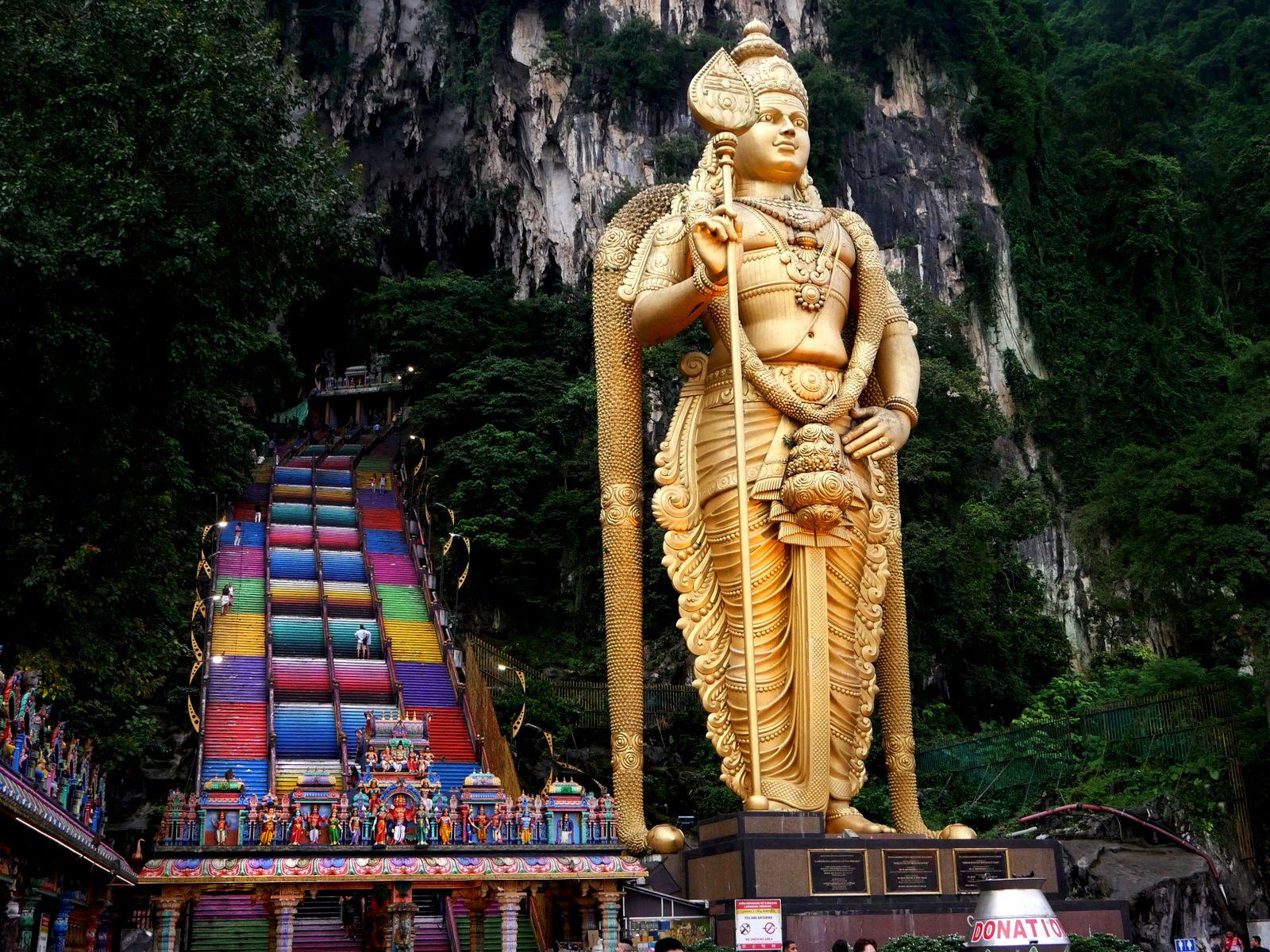
- Batu Caves — 272 steps and a 42.7m gilded statue of Lord Murugan, 13km north and reachable by KTM Komuter train in half an hour.
- Masjid Jamek and the confluence — the Moorish-revival mosque at the meeting of the Klang and Gombak rivers, the literal muddy confluence the city is named after.
- Sultan Abdul Samad Building — copper domes and horseshoe arches facing Merdeka Square.
- Islamic Arts Museum — among the finest collections in Southeast Asia, and mercifully cool.
- Thean Hou Temple — a six-tiered Chinese temple on a hill, spectacular during festivals.
Getting around
KL's rail network — LRT, MRT, monorail and KTM Komuter — covers most of what you'll want, and a stored-value card works across all of it. Grab fills the gaps. Avoid driving between 7–9:30am and 5–8pm.
Practical notes
- Book tower tickets ahead. Petronas skybridge slots sell out days in advance in peak season, and the deck closes on Mondays.
- Dress for indoors. Outside is 32°C and humid; inside is aggressively air-conditioned. Carry a layer.
- Rain comes late. The afternoon thunderstorm is a near-daily fixture and usually clears within the hour. Plan museums for 4pm.
- Mosque visits. Non-Muslims are welcome at Masjid Negara and Masjid Jamek outside prayer times. Robes are lent at the door.
Filed under City · Federal Territory of Kuala Lumpur
All experiences