Four faiths have been practised here for centuries, often on the same street. Malaysia's sacred architecture is the clearest record of how that worked.
Batu Caves
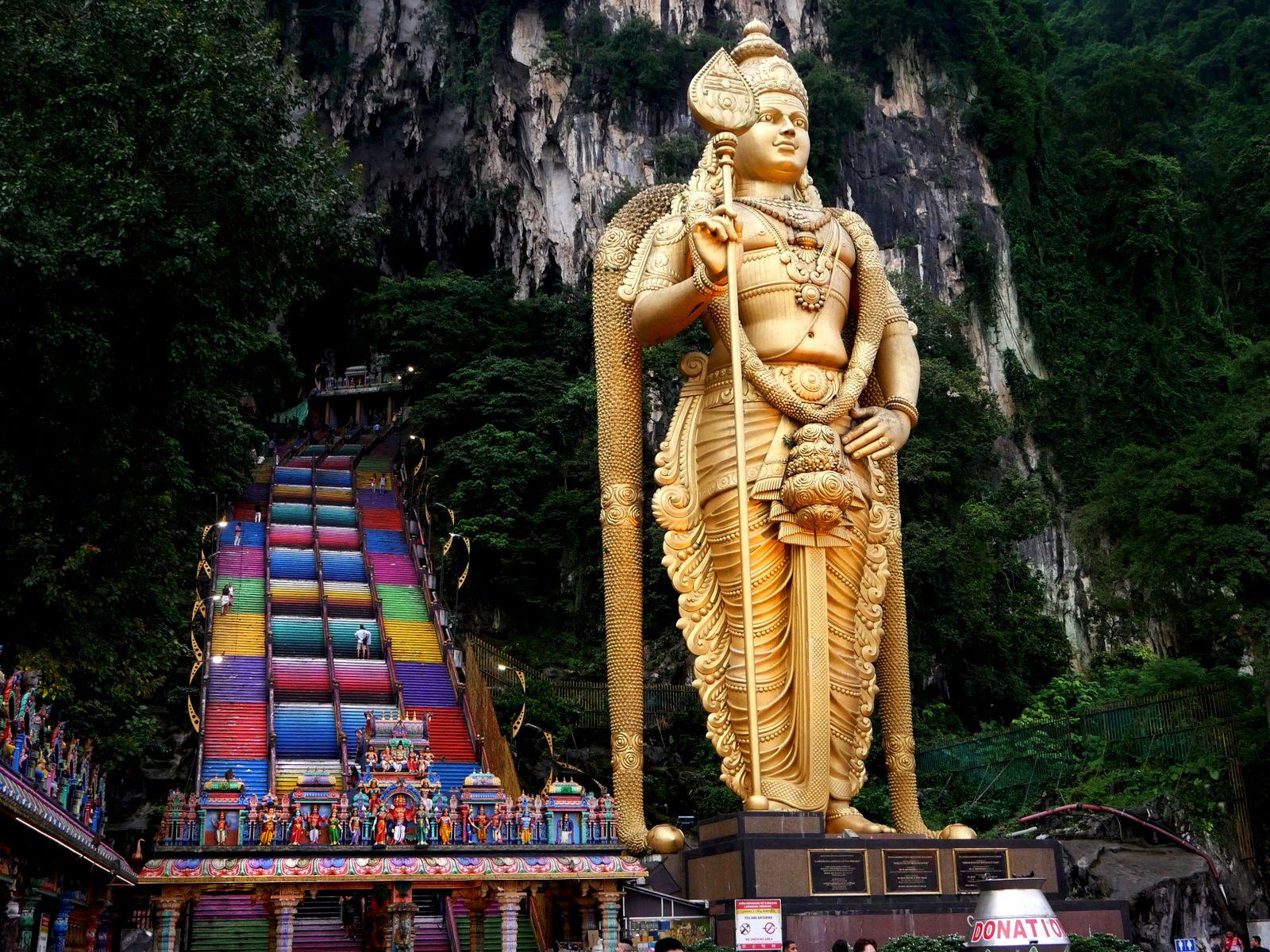
Thirteen kilometres north of central KL, a limestone massif around 400 million years old holds a series of caverns that have been a Hindu shrine since the 1890s. The main Temple Cave sits at the top of 272 steps, repainted in bands of colour in 2018 and now among the most photographed staircases anywhere.
At the foot of them stands a 42.7-metre gilded statue of Lord Murugan, the tallest of its kind in the world, unveiled in 2006.
Inside, the cavern opens to a ceiling perhaps a hundred metres up, with daylight falling through a collapsed section onto shrines at the far end. Macaques patrol the stairs and will take anything not held tightly — food, sunglasses, phones.
Thaipusam
Once a year, usually in January or February, the site receives well over a million pilgrims. Devotees carry kavadi — ornate frames borne on the shoulders, some attached with skewers through the skin — up the stairs as an act of penance and thanksgiving. It is extraordinary, overwhelming and not a spectacle staged for anyone. Go respectfully, or go another week.
Mosques
Putra Mosque, Putrajaya
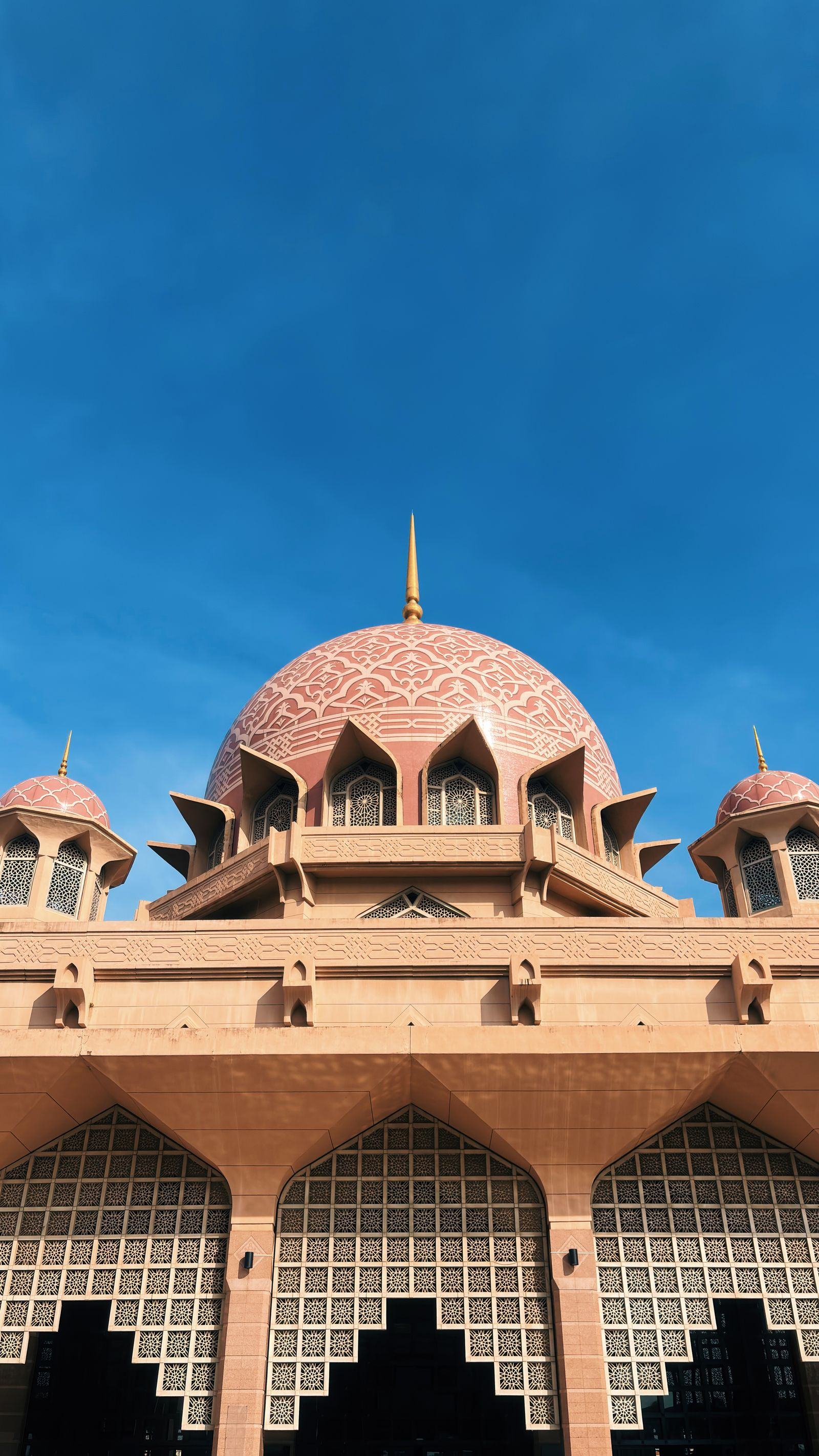
Built from rose-tinted granite on the edge of a man-made lake in the administrative capital, its pink dome reflecting in the water. The design draws on Persian and Malay traditions, and its minaret is among the tallest in the region. Non-Muslim visitors are welcome outside prayer times, and robes are provided.
Masjid Negara, Kuala Lumpur
The National Mosque, completed in 1965 and deliberately modernist — a folded, umbrella-like blue roof instead of a dome, standing in reflecting pools and gardens. Its statement is that a newly independent country would build in its own idiom.
Masjid Jamek, Kuala Lumpur
The oldest mosque in the city, from 1909, set exactly at the confluence of the Klang and Gombak rivers — the point where Kuala Lumpur began. Moorish arches, palm trees, and the LRT running past the door.
Kristal Masjid, Terengganu
The Crystal Mosque on Wan Man island, built of steel and glass, lit in shifting colours after dark and mirrored perfectly in the Terengganu river.
Temples and churches
- Kek Lok Si, Penang — the largest Buddhist temple complex in Malaysia, tiered up a hillside at Air Itam, crowned by a bronze statue of Kuan Yin. Spectacular in the weeks around Chinese New Year, when the whole hill is lit.
- Sri Mahamariamman, Kuala Lumpur — the oldest Hindu temple in the city, its gopuram tower crowded with painted deities, on the edge of Chinatown.
- Thean Hou Temple, Kuala Lumpur — six tiers dedicated to the sea goddess Mazu, blending Buddhist, Taoist and Confucian practice.
- Cheng Hoon Teng, Melaka — the oldest functioning Chinese temple in the country, dating to the 1600s, with materials shipped from China.
- St George's Church, Penang — the oldest Anglican church in Southeast Asia, built by convict labour in 1818.
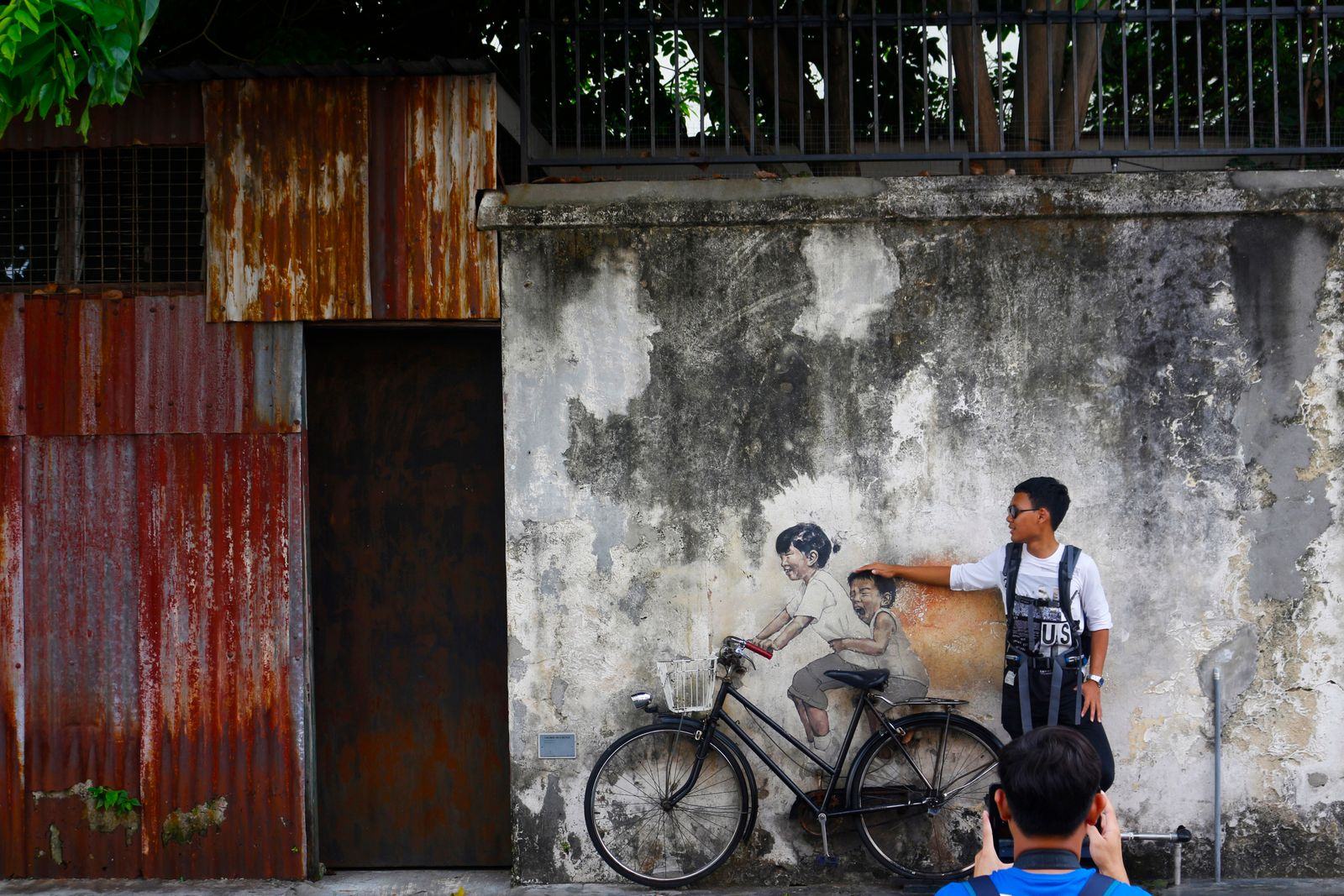
On George Town's Street of Harmony a mosque, a Chinese temple, a Hindu temple and an Anglican church stand within a few hundred metres of one another. They have been neighbours for two hundred years.
How to visit respectfully
All of these are working places of worship, not monuments. The rules are simple and universally appreciated.
- Cover shoulders and knees. Mosques lend robes and headscarves at the entrance at no charge. Hindu and Buddhist temples are less formal but the same standard is courteous.
- Remove your shoes before entering prayer halls. There will be a rack.
- Time your visit. Mosques close to visitors during the five daily prayers and for Friday midday prayers. Early morning and mid-afternoon are usually open.
- Ask before photographing people at prayer. Photographing the building is almost always fine.
- Don't point your feet at a shrine or an image, and step over — never on — a threshold in a Chinese temple.
Festival dates move
Thaipusam, Hari Raya, Deepavali, Wesak and Chinese New Year all follow lunar calendars, so their dates shift each year. Check before you fix your dates — they are the best time to visit and the hardest time to find a room.
Practical notes
- Batu Caves — 30 minutes by KTM Komuter from KL Sentral to the Batu Caves terminus, at the entrance. Go before 9am for cool stairs and few crowds.
- Putrajaya — 30 minutes by KLIA Transit from KL Sentral, then a local bus or Grab. Easy to combine with an airport departure.
- Monkeys. The macaques at Batu Caves are bold. Carry nothing loose, don't make eye contact, and never feed them.
- Modesty on the stairs. Shorts above the knee are refused at the Temple Cave entrance; sarongs are rented at the base.
Filed under Sacred · Selangor, Putrajaya & Penang
All experiences